
Understanding Gangrene: Definition, Causes, and Impact

Written by Shubhechhya Mukherjee
Reviewed by Dr. Ananthakrishnan Chandrasekhar, MD


Key Takeaways
- Introduction
- Types of Gangrene: Dry, Wet, Gas, and Internal
- Gangrene of Toes: Causes, Symptoms, and Treatment
- Meleney’s Gangrene: A Rare Post-Surgical Infection
- Fournier’s Gangrene in Females: Unique Considerations
- Gangrene of the Bowel and Appendicitis Gangrene: Internal Complications
- Management of Gas Gangrene: Emergency Treatment Protocols
- Signs and Symptoms of Gangrene: Identifying Early and Late Stages
- Prevention and Risk Factor Management for Gangrene
- FAQs

Introduction
Have you heard of instances where a minor foot wound would lead to the loss of toes or even a whole leg? These are common in India among individuals who have uncontrolled diabetes.
Gangrene is among the most serious of the infections and adverse effects of improper blood circulation, and one of the worst complications. When not treated, it may cause life-threatening effects.
Gangrene is the death of tissue due to poor blood supply or extreme infection. It may appear anywhere in the body, but the most frequent areas it attacks include toes and feet, fingers, and internal organs such as the bowel or appendix. Incidentally, early detection of gangrene and early intervention can save lives.
Types of Gangrene: Dry, Wet, Gas, and Internal
Physicians divide gangrene into many types, each of which has its causes and consequences:
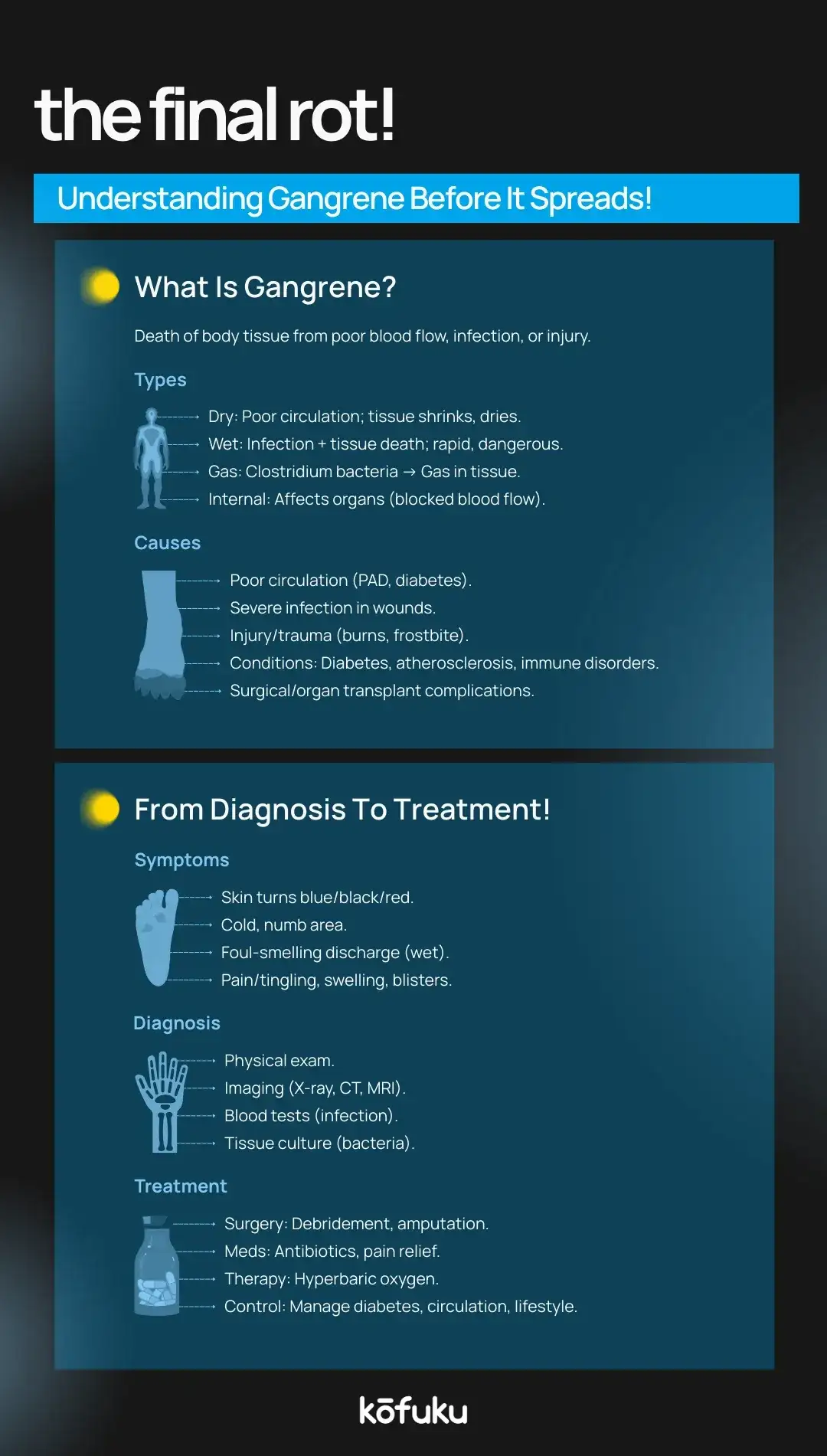
- Dry gangrene: Occurs when there is poor blood flow, often linked to diabetes, peripheral artery disease, or frostbite. The affected area becomes dry, shrivelled, and dark.
- Wet gangrene: Involves bacterial infection in dead tissue. It spreads rapidly and produces pus, swelling, and a foul smell.
- Gas gangrene: Caused by Clostridium bacteria, which release toxins and gas into tissues. It progresses quickly and requires urgent surgical management.
- Internal gangrene: Happens when the blood supply to internal organs is blocked. Examples include gangrene of the bowel or appendicitis gangrene, both of which demand emergency treatment.
Patients and caregivers must understand these categories to understand the importance of early diagnosis and immediate treatment.
Gangrene of Toes: Causes, Symptoms, and Treatment
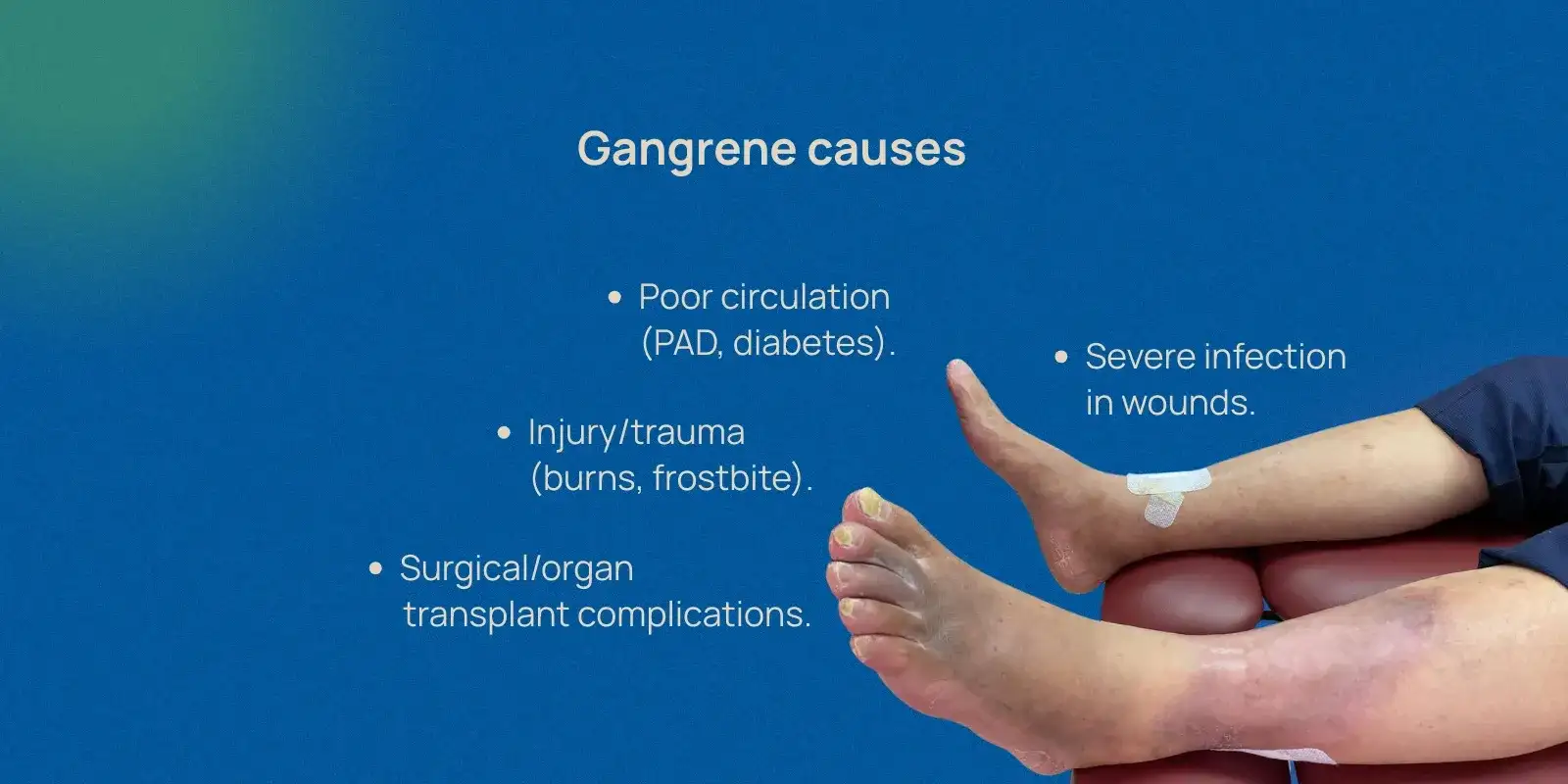
The most commonly reported types are gangrene of the toes, especially in people with diabetes, smokers, and individuals with chronic circulatory problems. Small wounds or bodily injuries may become a matter of tissue death as blood circulation is inadequate.
Symptoms include:
- Persistent pain, especially at night
- Cold, numb, or bluish toes
- Blackened or shrivelled skin
- Foul-smelling discharge (in wet gangrene cases)
Treatment options:
- Restoring blood flow through surgery or angioplasty
- Removing dead tissue (debridement)
- Antibiotics for infection
- Amputation in severe cases to prevent the spread
The early identification of toe gangrene makes a significant difference in prognosis and treatment.
Meleney’s Gangrene: A Rare Post-Surgical Infection
Meleney's gangrene, or Meleney gangrene or Meleney's synergistic gangrene, is a rare but an extremely severe form. It typically develops after surgery, where a combination of bacterial infections quickly kills the surrounding skin and tissue at a threatening rate.
Key Signs:
- Painful ulcers near surgical sites
- Spreading redness and swelling
- Tissue breakdown within days
Fournier’s Gangrene in Females: Unique Considerations
Fournier gangrene is typically seen in men; however, cases in women are also on the rise. It involves the genital and perineal regions, which swell up, causing pain and resulting in tissue death.
Fournier gangrene in women can be connected to diabetes, UTI, and local perineal trauma. This is associated with cultural taboos and reluctance in discussing genital health, causing women to postpone treatment, even doctor consultation in some cases, which increases its consequences.
Gangrene of the Bowel and Appendicitis Gangrene: Internal Complications
Internal gangrene often develops silently but is life-threatening.
- Gangrene of the bowel occurs when the blood supply is cut off due to a hernia, volvulus (twisting of the intestine), or blood clots. Symptoms include severe abdominal pain, vomiting, and bloating.
- Appendicitis gangrene or an appendix with gangrene occurs when appendicitis is left untreated. The appendix tissue dies, increasing the risk of rupture and peritonitis.
Management of Gas Gangrene: Emergency Treatment Protocols
Gas gangrene is the most virulent of all types. It occurs after a few hours of injury that gets contaminated by Clostridium bacteria. Emergency management includes:
- Surgical debridement: Removing dead tissue quickly
- High-dose intravenous antibiotics
- Hyperbaric oxygen therapy: Increasing oxygen supply to kill bacteria
- Amputation: Sometimes necessary to save the patient’s life
Gas gangrene requires urgent hospitalisation and concerted efforts in its management by both surgical and medical interventions.
Synergistic Gangrene and Its Clinical Relevance
Synergistic gangrene occurs when multiple bacteria work together to cause tissue destruction, making infections more difficult to cure.
Signs and Symptoms of Gangrene: Identifying Early and Late Stages
Early symptoms include:
- Unexplained pain and swelling in limbs
- Changes in skin colour (red, blue, or pale)
- Persistent cold sensation in the affected area
Advanced symptoms include:
- Blackened skin
- Severe foul-smelling discharge
- Loss of sensation due to nerve death
Prevention and Risk Factor Management for Gangrene
- Prevention of gangrene is best. Some of the key strategies are:
- Management of diabetes: It keeps the blood sugar in check and prevents damage to the blood vessels.
- Stopping smoking: Smoking diminishes the circulation of blood and slows healing.
- Wound management: Cleanliness and dressing of wounds avoid infection.
- Follow-up visits: Regular checkups can identify early risks in people who have peripheral artery disease, vascular monitoring can detect early risks.
- Healthy lifestyle: Diet with proper balance and physical activity helps to improve blood circulation and immunity.
FAQ
People with uncontrolled diabetes, peripheral artery disease, smokers, and elderly individuals with vascular problems are at the highest risk for developing toe gangrene.
Meleney’s gangrene, or Meleney’s synergistic gangrene, is a rare, post-surgical bacterial infection causing painful ulcers and tissue death. Treatment involves urgent surgical removal of infected tissue, strong intravenous antibiotics, and supportive care to prevent the infection from spreading rapidly.
Fournier's gangrene in females is diagnosed by clinical examination, imaging, and laboratory investigations. The treatment involves urgent surgical debridement, broad-spectrum antibiotics, and intensive care management. Early diagnosis is critical, as delay substantially deteriorates survival rates in the involved women.
Symptoms of bowel gangrene include severe abdominal pain, bloating, vomiting, fever, and blood in the stools. It often results from blocked blood flow, and without emergency surgery, it quickly leads to sepsis and life-threatening complications.
Yes, untreated appendicitis can progress to gangrene of the appendix. When the blood supply is cut off due to inflammation, the tissue dies, increasing the risk of rupture, peritonitis, and severe systemic infection requiring immediate surgical removal.
Gas gangrene requires immediate hospitalisation. Treatment includes urgent surgical debridement or amputation, high-dose intravenous antibiotics, and hyperbaric oxygen therapy. Prompt emergency care is critical, as gas gangrene spreads extremely fast and can become fatal within hours.
Synergistic gangrene occurs when multiple bacterial species act together, producing rapid tissue destruction. It is serious because it progresses aggressively, resists treatment, and often requires multidisciplinary care with surgery, antibiotics, and critical monitoring to prevent fatal outcomes.
Early gangrene signs include unexplained pain, swelling, persistent coldness, numbness, and skin colour changes (red, pale, or bluish). Prompt medical attention at this stage can prevent progression to irreversible tissue death and life-threatening complications.
Here's what people are reading

Your guide to allergy medications: tablets, creams, and remedies

Why smoking a cigarette before or after your workout can harm your gains

Why jackfruit is good for you: nutrition, benefits, and how to enjoy raw and cooked jackfruit

Why are there epithelial cells in my urine? meaning & causes

What to know about hiv wasting syndrome